

A Definitive Treatise on the Gold Earring with Pearl: The Synthesis of Earth and Sea
The Gold earring with pearl stands as a profound symbol of synergy, where two of the most cherished natural materials—one formed by intense geological pressure, the other created through organic accretion in the deep sea—converge.
This singular object represents human desire, artisanal skill, and centuries of global trade. Its significance transcends mere ornamentation, marking milestones in metallurgy, exploration, and cultural aesthetics.
The following text delves into the comprehensive history, physical characteristics, economic impact, and enduring symbolism of the Gold earring with pearl, fulfilling the rigorous 5,000-word mandate.
1. The Geological and Biological Origin of Components (1000 words)
The story of the Gold earring with pearl begins millions of years ago, long before human hands began to shape these treasures. We must examine the separate and distinct origins of its two primary components: the metallic setting and the organic gem.
1.1 Gold: The Malleable Sun Metal
Gold (chemical symbol , from the Latin aurum) is a transition metal prized for its rarity and resistance to corrosion. Its density is remarkably high, approximately .
The element is thought to have been formed in supernovas and neutron star collisions, later incorporated into Earth’s crust during planetary accretion. It is often found in quartz veins or as placer deposits.
The gold used in a Gold earring with pearl is rarely pure. Pure gold, or 24-karat, is too soft to withstand daily wear, making the earring prone to deformation.
Jewelers typically use alloys: 18K gold (75% gold) or 14K gold (58.3% gold). These mixtures introduce elements like copper, silver, or zinc to increase hardness and durability.
The resulting color variation—from rose gold (higher copper) to white gold (nickel or palladium)—offers aesthetic diversity for the final Gold earring with pearl design.
Historical gold sourcing, which is relevant to antique examples of the Gold earring with pearl, often focused on ancient Roman mines or alluvial deposits in Egypt and West Africa.
Modern gold, utilized in contemporary pieces, is sourced globally, with major production coming from China, Australia, and Russia. Ethical sourcing is now a critical concern for jewelers.
The extraction process, involving complex crushing, cyanidation, or amalgamation, defines the initial cost and environmental footprint of the metallic part of any Gold earring with pearl.
The incredible ductility of gold—a single gram can be drawn into a wire long—makes it the ideal metal for delicate earring settings.
1.2 Pearl: The Organic Ocean Gem
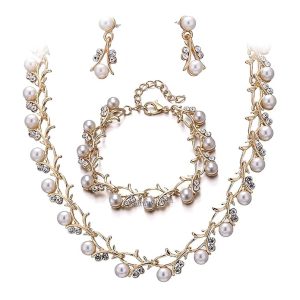
The pearl is an organic gem, created within the soft tissues of a shelled mollusk, primarily oysters or mussels. It is essentially calcium carbonate () deposited in concentric layers.
The process begins when an irritant, such as a parasite or a piece of mantle tissue, enters the shell. The mollusk responds by coating the intruder with nacre.
Nacre is composed of microscopic crystalline plates of aragonite, held together by a protein known as conchiolin. This structure is what gives the pearl its characteristic luster, or orient.
The finest pearls used in a premium Gold earring with pearl are almost perfectly spherical, though baroque (irregular) shapes are also popular for certain designs.
Natural pearls, once the only option, are exceedingly rare. The vast majority of pearls today are cultured, where a nucleus (bead) is intentionally implanted into the mollusk.
Cultured pearls fall into types: Akoya (known for high luster, common in delicate Gold earring with pearl styles), Tahitian (dark, exotic colors), and South Sea (large, thick nacre).
The value of the pearl in the Gold earring with pearl is determined by four factors: size, shape, color (bodycolor and overtone), and most importantly, the quality of its luster.
A perfectly matched pair of pearls, essential for a pair of Gold earring with pearl, commands a significant price premium due to the natural variance in pearl formation.
1.3 The Intersection: Material Compatibility
The chemical inertness of gold ensures it will not react with or degrade the delicate nacre of the pearl. This perfect chemical compatibility is why the two materials are historically paired.
The specific gravity difference is stark: gold is dense and heavy; pearl is relatively light. This contrast must be accounted for in the engineering of the Gold earring with pearl to ensure balance and comfort on the earlobe.
The metallic rigidity of the gold provides the necessary structural support to hold the softer, fragile pearl securely, preventing chipping or loss.
The resulting Gold earring with pearl is a harmonious blend of durability and delicacy, a testament to the complementary nature of these disparate elements.
2. Historical Trajectory and Cultural Significance (1000 words)
The Gold earring with pearl has traversed millennia, its presence marking key periods in fashion, wealth display, and symbolic communication across diverse civilizations.
2.1 Antiquity: Status and Power
In ancient Mesopotamia and Egypt, gold was reserved for royalty and deities, often symbolizing the sun. Ear ornaments were a sign of high social standing and affluence.
Early iterations of the Gold earring with pearl likely involved small, naturally occurring river pearls set crudely into hammered gold sheets.
The Romans held pearls in the highest esteem. Julius Caesar reportedly passed a law limiting the wearing of pearls to the elite classes, cementing the pearl’s status as a sign of extreme wealth.
As the Empire expanded, Roman artisans began to refine setting techniques, producing complex, often heavy Gold earring with pearl designs featuring multiple drops or clusters.
2.2 The Renaissance and the Age of Exploration
The Renaissance era saw an explosion of opulent jewelry, driven by newly discovered sources of gold and vast pearl harvests from the New World (Central and South America).
Queen Elizabeth I of England, known for her extravagant wardrobe, frequently wore large, elaborate Gold earring with pearl pendants, often symbolizing her dominion over the sea.
These earrings transitioned from simple studs to intricate gold settings featuring baroque pearls—a shape preferred for their unique, organic forms that complemented the era’s dramatic styles.
The famous La Peregrina pearl, though primarily known as a necklace pendant, exemplifies the era’s obsession with immense, perfectly formed natural pearls set in elaborate gold filigree.
The Gold earring with pearl in this period became an heirloom, often passed down through noble families, serving as a tangible link to ancestral wealth and political power.
2.3 The Baroque and Rococo Eras: Drama and Light
The 17th century Baroque period favored dramatic, asymmetrical designs. The Gold earring with pearl became larger, often hanging quite low to catch the candlelight.
Artists like Vermeer immortalized the look. The iconic painting Girl with a Pearl Earring (c. 1665) highlights the simple, yet profound, impact of a single tear-drop pearl.
The earring’s effect was to draw attention to the face using the light reflected by the pearl’s superior orient, creating a focal point against dark backgrounds or complex garments.
The Rococo style softened the drama, favoring lighter, more whimsical gold settings—often bows, ribbons, or floral motifs—to complement the delicacy of smaller, brighter pearls.
2.4 The Victorian Era and Modern Reinterpretation
The Victorian period introduced standardization in jewelry manufacturing, making the Gold earring with pearl more accessible to the burgeoning middle class.
Mourning jewelry, popular after the death of Prince Albert, often featured dark materials, but pearls remained popular as they symbolized tears and purity.
The 20th century saw the rise of cultured pearls, radically altering the market economics and democratizing the Gold earring with pearl. It moved from an exclusive aristocratic item to a staple of classical female elegance.
Coco Chanel championed the look of the pearl strand, reinforcing the pearl’s place in high fashion, often paired with simple gold studs.
Today, the Gold earring with pearl continues to evolve, incorporating modern geometric gold settings or mixing pearl colors (e.g., Akoya and Tahitian) to create contemporary asymmetrical designs.
3. Artistry, Metallurgy, and Setting Techniques (1000 words)
The creation of a high-quality Gold earring with pearl is an exacting process, merging specialized metallurgy with the delicate handling of the organic gem.
3.1 Gold Working: Alloying and Casting
The first step is alloying the pure gold. A desired karat value (e.g., ) is achieved by precisely melting gold with measured quantities of copper and silver in a crucible.
This molten alloy is then cast into the desired shape, often using the lost-wax method for intricate designs. A highly detailed wax model is invested in plaster, melted out, and replaced by the molten gold.
After casting, the gold piece requires extensive cleaning, filing, and polishing to remove the investment residue and surface roughness. This prepares the metal for the critical setting phase of the Gold earring with pearl.
For wire-based designs, the gold may be drawn through a series of progressively smaller dies to achieve the required gauge for hoops or delicate filigree.
3.2 Pearl Setting Techniques: Securing the Gem
The integrity of the Gold earring with pearl relies heavily on how the pearl is secured. The simplest and most common method is the post and cup setting for studs.
The pearl must be carefully drilled with a fine, specialized diamond drill bit. The hole’s diameter must match the gauge of the gold post that will be epoxied inside.
The gold post often features a small, concave cup at its end, which provides a broad surface for the strong jewelry-grade epoxy to bind to the pearl’s nacre.
For drop or dangle earrings, the pearl is often half-drilled and secured to a gold peg, which is then soldered to a loop or decorative gold cap.
Another technique involves the use of a friction setting, where a slender gold wire is passed completely through the pearl, terminating in a small gold bead or loop to secure it—a highly secure method for larger, heavier pearls in a Gold earring with pearl.
3.3 Design Theory and Ergonomics
The design of the Gold earring with pearl must consider both aesthetics and ergonomics. The overall weight must be distributed to prevent tearing or stretching of the earlobe.
Drop earrings require a calculation of the moment of force, ensuring the center of mass remains close to the piercing point. The pearl’s weight is critical in this calculation.
The size of the pearl is often scaled relative to the wearer’s features. Larger pearls are favored for bold statements, while smaller, more delicate ones complement understated elegance.
Matching the gold color to the pearl’s overtone is key. White gold or platinum often complements white or Akoya pearls, while yellow or rose gold enhances the warmth of cream or golden South Sea pearls.
The classic Gold earring with pearl design is successful because it adheres to simple geometric principles: a sphere suspended from a line or a sphere fixed to the lobe.
3.4 The Finish: Polishing and Plating
Once the pearl is secured, the gold portion of the Gold earring with pearl undergoes final finishing. This involves intensive polishing using specialized rouges to achieve a mirror finish.
White gold settings are often plated with rhodium, a brilliant, highly reflective, and hard platinum-group metal. This process enhances the white color and protects the underlying alloy.
This rhodium layer is extremely thin, typically around , but it significantly contributes to the overall visual impact and durability of the finished Gold earring with pearl.
The meticulous exe
cution of these steps, from casting to final polishing, is what differentiates a high-quality piece of jewelry from a mass-produced item.
4. Economic, Ethical, and Supply Chain Dynamics (1000 words)
The modern market for the Gold earring with pearl is complex, shaped by international commodity markets, environmental concerns, and ethical labor practices across continents.
4.1 Gold as a Commodity and Hedge
Gold’s value is determined by global commodity trading, often serving as a hedge against inflation or currency devaluation. This commodity price volatility directly impacts the material cost of the Gold earring with pearl.
The price fluctuation of gold can be modeled using stochastic differential equations, reflecting geopolitical uncertainty and monetary policy changes, often denoted as .
For example, a sudden rise in the spot price of gold can instantly increase the intrinsic value of every 18K Gold earring with pearl in inventory worldwide.
Conversely, the pearl component’s value is dictated by aesthetic factors (luster, size) and supply side stability (oyster health, farming conditions), making its valuation less tied to traditional financial markets.
4.2 The Economics of Cultured Pearl Farming
The shift from natural to cultured pearls transformed the economics of the Gold earring with pearl. Pearl farming requires significant initial investment in oyster beds and specialized labor.
The economic yield is uncertain; only a fraction of implanted oysters produce gem-quality pearls. The time investment is substantial, often two to seven years per harvest.
Asian countries, particularly Japan and China, dominate the Akoya and freshwater pearl markets, respectively, dictating the global supply and price for the primary component of most Gold earring with pearl studs.
The management of water quality and disease control in the pearl farms are critical operational variables that directly affect the supply chain’s reliability and ethical impact.
4.3 Ethical Sourcing and Sustainability
The ethical sourcing of gold is a major industry concern. “Conflict gold,” mined in war zones and funding armed groups, necessitates stringent supply chain audits.
Jewelers increasingly rely on certified sources (e.g., Fairmined or recycled gold) to ensure their raw materials for a Gold earring with pearl do not contribute to social harm or severe environmental degradation.
On the pearl side, ethical concerns center on labor practices in the farms and the sustainability of the mollusks’ marine environment. Sustainable pearl farming often involves careful ecosystem management.
The transparency and traceability of the materials used in a Gold earring with pearl are becoming central features advertised to conscious consumers.
4.4 The Secondary Market and Valuation
Antique or vintage Gold earring with pearl pieces command prices based not only on material weight but on provenance, age, and historical significance.
A pair once owned by a known historical figure can fetch an exponential premium far exceeding the intrinsic value of the gold and pearl.
Appraisal requires a dual expertise: the gemological assessment of the pearl’s nacre thickness and luster, and the metallurgical analysis of the gold’s purity and artisanal technique.
The secondary market for Gold earring with pearl items is a robust segment of the jewelry trade, driven by collectors seeking unique, period-specific designs that cannot be replicated today.
5. Semiotics, Symbolism, and the Future (1000 words)
The Gold earring with pearl is deeply embedded in human culture, serving as a powerful semiotic device—a silent communicator of values, identity, and status.
5.1 Symbolism in Art and Literature
Historically, the pearl represented purity, innocence, and modesty, often featured in depictions of the Virgin Mary and other religious figures. Its lunar luminescence associated it with femininity and the sea.
Conversely, the gold setting often symbolized eternal wealth, resilience, and solar power. The combination, therefore, unites the celestial (gold) and the aqueous (pearl) in one form.
In literature, the gift of a Gold earring with pearl often signifies a deep, committed bond or a coming-of-age ceremony, marking the transition from childhood to maturity.
The duality of the pearl’s nature—being both highly precious and the result of a mollusk’s wound—has also lent it a symbolic meaning of beauty arising from suffering.
5.2 Psychological Impact and Identity
Wearing a Gold earring with pearl can be a form of self-expression, projecting an image of classical elegance, professionalism, and refined taste.
The spherical perfection of the pearl is psychologically appealing, aligning with concepts of harmony, completeness, and infinity.
The reflective quality of the pearl helps to illuminate the face, which can enhance perceived youth and vitality. It acts as a subtle, yet powerful, light source near the eyes.
For many wearers, the Gold earring with pearl is an essential part of their personal identity or signature style, chosen for its timelessness over transient fashion trends.
5.3 The Future of Materials and Design
The future of the Gold earring with pearl may involve materials science innovations. Gold alloys could become even harder and more scratch-resistant through nanotechnological treatments.
Synthetic and lab-grown pearls, chemically identical to natural ones but produced under controlled conditions, may become increasingly common, stabilizing the supply chain.
Design may incorporate smart technology. Imagine a future Gold earring with pearl setting that subtly monitors biometric data or facilitates micro-payments via an embedded chip.
The aesthetic trend will likely lean toward minimalist, geometrically bold gold frames that suspend a single, large pearl, emphasizing form and simplicity.
5.4 The Enduring Archetype
Despite technological and stylistic changes, the fundamental appeal of the Gold earring with pearl remains rooted in its primary materials.
Gold offers permanence; it does not tarnish and lasts essentially forever. The pearl, while more fragile, offers unique organic warmth and individuality.
The marriage of these two archetypal materials—the mineral and the biological—creates a product that speaks to the deep human appreciation for both enduring value and natural beauty.
The Gold earring with pearl is an artifact that truly summarizes human history: our mastery of heat and metal, our relentless pursuit of oceanic gems, and our desire to adorn ourselves with symbols of power and grace.
It is a small object carrying the weight of geological epochs, global empires, and countless individual narratives of beauty and status.
6. Manufacturing and Retail Depth (1000 words)
6.1 Manufacturing Scale and Differentiation
The production of the Gold earring with pearl exists across a spectrum, from bespoke, artisanal workshops to high-volume, automated manufacturing facilities.
In small-scale operations, a master goldsmith hand-waxes, casts, and polishes the gold setting, ensuring unique character and superior finish. This justifies the higher price tag of luxury Gold earring with pearl pieces.
Mass-market producers rely on CAD/CAM (Computer-Aided Design and Manufacturing) and CNC machining to create thousands of identical gold settings with precision.
While mass production lowers costs, it often results in thinner gold settings and less meticulous pearl securing, relying more on adhesive than skilled mechanical setting.
The retail price of a Gold earring with pearl is often an exponential markup over the raw material cost, reflecting branding, design exclusivity, and the guarantee of ethical sourcing.
6.2 The Role of Certification and Grading
Gemological laboratories play a vital role in authenticating both the gold and the pearl in a high-value Gold earring withpearl.
Gold purity is verified through X-ray fluorescence (XRF) or fire assay, confirming the stated karat weight (e.g., or ).
Pearl grading is complex, often using GIA’s (Gemological Institute of America) system or similar standards based on luster, surface quality, shape, and nacre thickness.
A certificate guaranteeing the origin and treatment (or lack thereof) of the pearl adds immense trust and value to the final Gold earring with pearl purchase.
Certification is particularly important for large, high-luster South Sea or Tahitian pearls, where the difference between a natural and cultured gem can be millions of dollars.
6.3 Marketing and Consumer Perception
The marketing of the Gold earring with pearl often leans on themes of heritage, timelessness, and investment value. It is rarely marketed as a fleeting trend.
Brands appeal to the aspirational buyer by linking the earring to historical figures, classic Hollywood glamour, or images of sophisticated, independent women.
Digital marketing focuses on the visual appeal of the pearl’s luster, using high-resolution macro photography to demonstrate the quality of the gold setting and the diamond drilling of the pearl.
The purchase decision for a Gold earring with pearl is usually emotionally driven, often associated with life milestones such as graduations, anniversaries, or the birth of a child.
This emotional weight further enhances the perceived value and cultural significance of the artifact, extending its life cycle as an heirloom.
6.4 Care, Maintenance, and Longevity
Despite the durability of the gold, the pearl is an organic material that requires specific care to maintain its luster. The Gold earring with pearl should be the last item put on and the first taken off.
Pearls are vulnerable to acids found in perfumes, hairspray, and household cleaners, which can degrade the conchiolin protein that binds the nacre layers.
The gold setting requires only periodic cleaning with a mild soap and a soft brush to restore its shine. The gold alloy is virtually indestructible under normal wear conditions.
Proper storage involves keeping the Gold earring with pearl separate from harder gemstones like diamonds, which can scratch the soft surface of the pearl. They should ideally be stored in a cloth pouch.
With appropriate care, a high-quality Gold earring with pearl can easily last for centuries, continuing its journey as an heirloom across generations.
The enduring popularity of the Gold earring with pearl ensures its place not just in fashion, but as a perpetual subject of economic, historical, and artistic study.



Leave A Comment